De Ambassade: Architecture of Sound, Dystopian Realities, and Being “Alone Together”
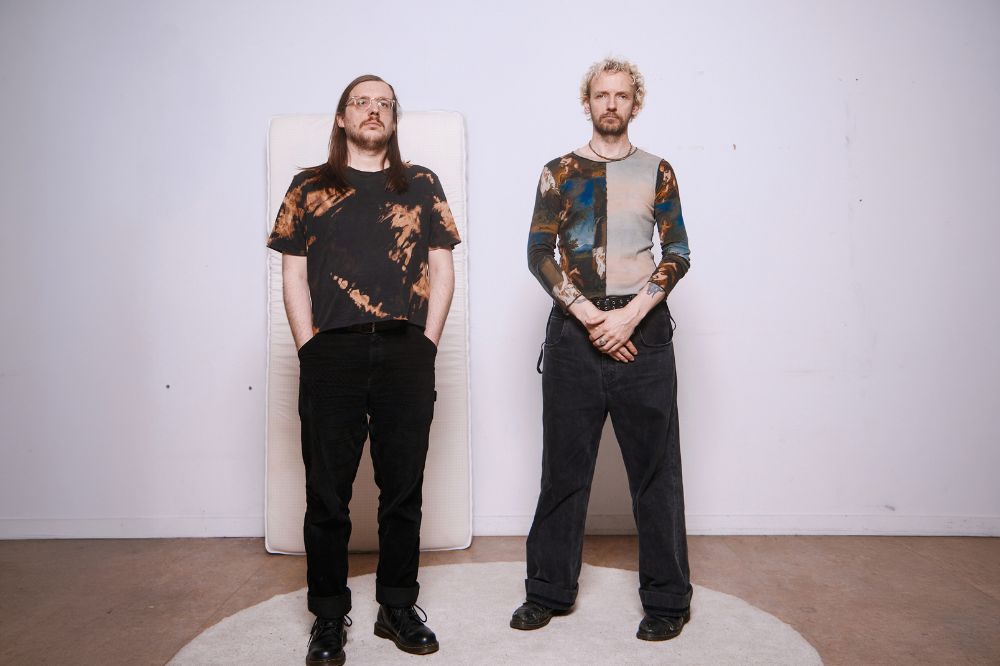
Living in the Netherlands myself, it felt especially meaningful to speak with fellow Dutch act De Ambassade for the first time on beater.gr, ahead of their upcoming live performances in Greece on May 15 and 16, 2026, in Athens and Thessaloniki. With Manrira marking a bold new chapter for the band, our conversation moved through the ideas and emotions shaping this project — from the relationship between sound, architecture, body, and space, to the balance between dancefloor intensity and introspective listening. We also discussed the shift away from the aesthetics of The Fool, the importance of audiovisual storytelling in their live performances, the role of stillness and tension inside their shows, as well as the dystopian undercurrents running through their work and how these reflect the present moment.
If someone walks into your show in Greece without knowing your music, what do you want them to feel in the first five minutes?
Disoriented in a good way. Uncertain about what’s coming next. Like they’ve stepped into a space that doesn’t quite follow the rules they expected. We’re not interested in immediately giving people what they expect from a live show. We want them to stop thinking about where they came from and start paying attention to what’s happening in the room, the architecture of sound around them.
Manrira sounds very visual—did it start from images, sounds, or a specific idea?
It started with a framework, an idea but combined with all the rest you mentioned before. I had a clear idea of what I wanted and I didn’t want to stray from it, even when that meant leaving certain songs out entirely. That kind of limitation can sound restrictive, but for me it was actually liberating.
Your music sits between club energy and introspective listening. Do you see yourselves more as a live band or part of a dancefloor culture?
Both, and we don’t think the tension between them needs resolving. Dancefloor culture at its best has always been introspective — people in dark rooms, alone together, processing things they sometimes can’t say out loud. We also come from that world.
What changed the most in your process compared to The Fool?
I think we pretty much shifted styles, we were no longer interested in that 80’s layer, referring back to the wave genres or whatever. That shift changed how we composed, including scrapping things that weren’t serving the framework such as the more conventional pop related arrangements. Then I’d remove it and start over, that felt very liberating.
You’re now working in a more collaborative, audiovisual format—what pushed you in that direction?
The music demanded it. When you’re working with something as cinematically charged compositions, you can’t separate what you hear from what you see and feel. The audiovisual dimension isn’t a concept we applied later on top of the music. It was already inside it in a way.
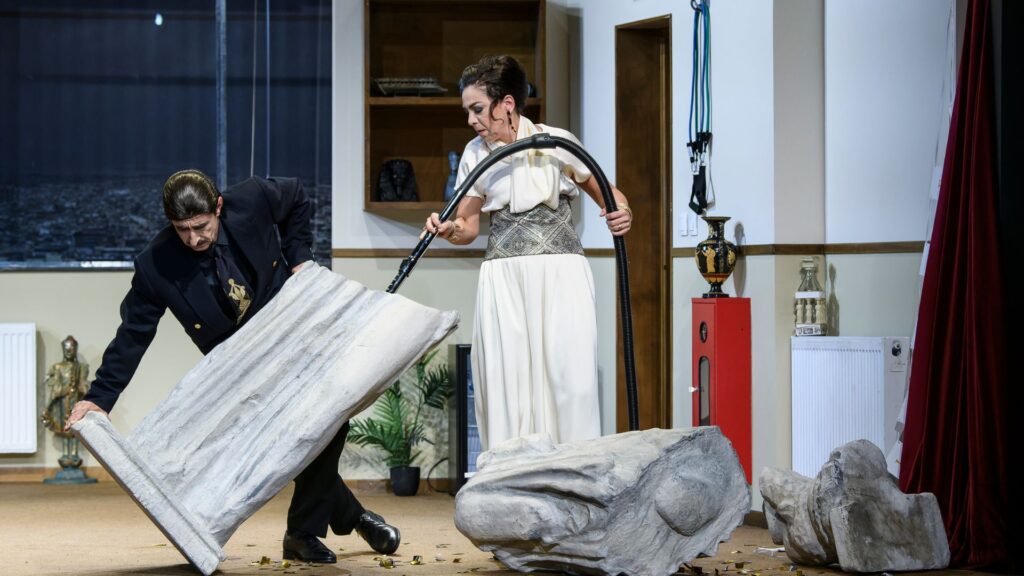
How tightly synced are the visuals with the music during The Tale of Manrira? Is there room for things to shift live?
We’re trying to run a fixed sequence. I’ve always felt that visuals and music go hand in hand, and timing is definitely essential in that regard.
You mention the relationship between voice, body, and space—what does that actually look like on stage?
It’s not about what’s happening on stage. When you’re in the space where our performance is taking place, you’re part of it. Depending on the space — how high the ceiling is, how many people are there, what the walls absorb or reflect, we all work with that. We’re always in conversation with the architecture, the space we’re in.
Do you think of Manrira as something to be listened to, watched, or physically experienced?
We want people to feel it somewhere below the neck — and then, hopefully, have it stay with them in a way that makes them want to listen again, alone, and find something different there.
There’s a dystopian undercurrent in your work—does it reflect the present, or is it more of an imagined world?
The present is already dystopian enough that the line between reflection and imagination is thin. Manrira confronts structures of value, profit and power. That felt more honest than either despair or escape.
What kind of space do you ideally want to perform this project in—and how does that compare to a club setting?
The album features a variety of sounds and compositional styles, making it suitable for both a museum setting and a club or live performance venue. Personally, I think it would be really cool to perform this piece, with all its symbolic significance, in a church sometime.
What are you most curious to see or feel from the audience during these shows in Greece?
Whether the stillness holds. There are moments in Manrira where the music asks the audience to do nothing — just be there. We’re curious whether people surrender to that or resist it. Both are interesting.
After these performances, what’s the next step for Ambassade?
The album is out on May 8th on Pinkman Records, the shows in Greece are the first time we play this material live — so right now, we’re focused on that. What comes next will depend on what we learn from these performances. Manrira is a tale, a world. There’s more in there..